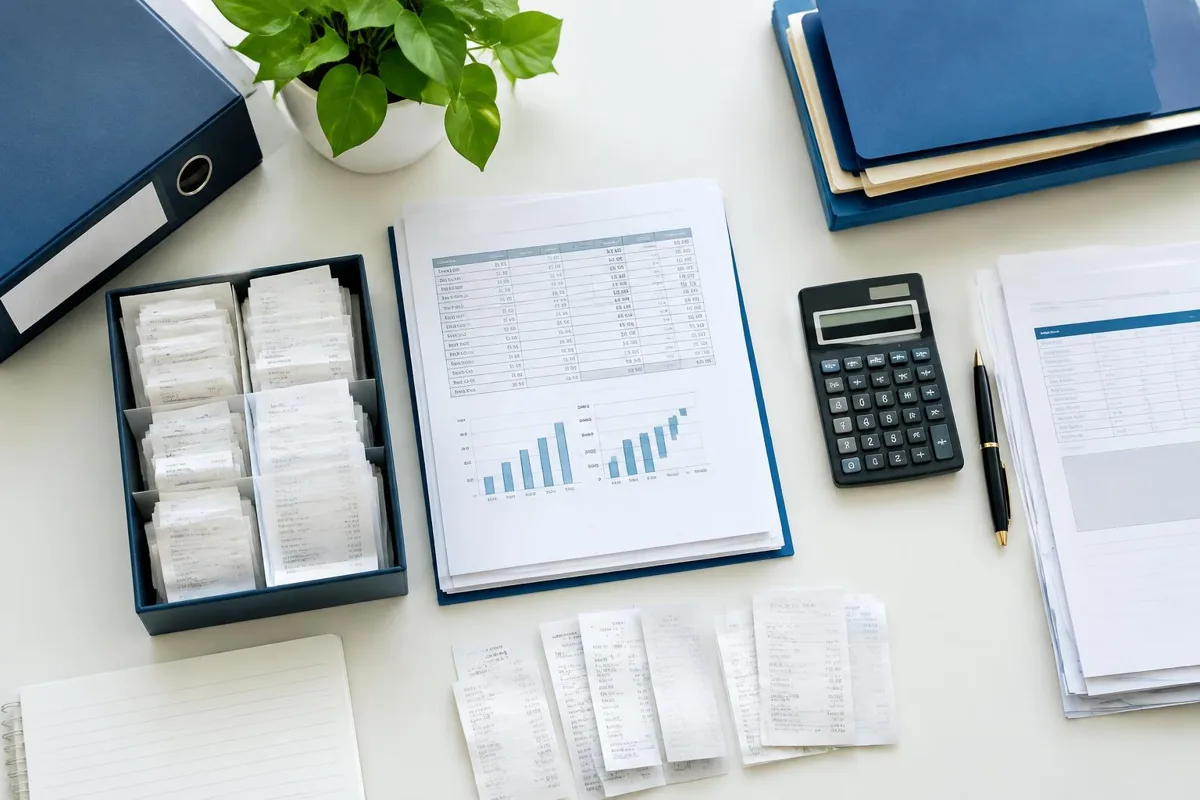

To learn how to read small business financial statements, start with three questions: did the business earn a profit, what does it own and owe, and where did its cash go? The profit and loss statement, balance sheet, and cash flow statement address those questions from different angles. Read them together, using consistent periods and an understood accounting basis, rather than treating any single number as the whole story.
The Three Main Financial Statements
A profit and loss statement summarizes revenue and expenses over a period. A balance sheet shows assets, liabilities, and equity at a specific date. A cash flow statement explains changes in cash over a period, commonly grouped into operating, investing, and financing activities.
Our financial statements support concerns bookkeeping-generated reports within an agreed scope. These are not automatically audited, reviewed, or compiled assurance statements.
Understand The Profit And Loss Statement
Revenue, Expenses, And Profit
Suppose a business reports $20,000 in monthly revenue and $15,000 in expenses. The simplified result is $5,000 in profit. Review what is included in expenses and whether the report uses cash or accrual accounting before interpreting that figure.
On an accrual basis, revenue may include earned amounts customers have not yet paid. On a cash basis, payment timing affects the report differently. Accounting-method and tax questions belong with your qualified accountant; do not change settings simply to produce a more favorable number.
Compare Categories And Periods
Compare this month's results with prior months on the same basis. If advertising increases from $500 to $1,200, ask whether it reflects a campaign, a posting error, or a category change.
Check whether costs were omitted or categorized inconsistently. A credit card payment is not another operating expense when the purchases were already recorded. Reliable interpretation starts with reliable transaction records.
How To Read A Balance Sheet
The balance sheet follows the relationship assets equal liabilities plus equity. Assets include resources such as cash, amounts customers owe, and equipment. Liabilities include obligations such as loans, unpaid bills, and certain payroll-related amounts. Equity represents the remaining accounting interest after liabilities.
For a simplified example, assets of $40,000 and liabilities of $25,000 leave equity of $15,000. Equity is not the same as cash available in the bank. Some assets may be equipment or unpaid customer invoices, and obligations may require cash soon.
Review the dates and details behind balances. Old receivables may need attention; a negative liability or unexplained opening balance deserves a question. Do not delete a balance just because it looks unfamiliar. Trace its source and ask what correction, if any, is appropriate.
Understand Cash Flow
Cash flow explains cash movement, which does not always match profit. Cash collected from customers and paid for operating costs differs from cash used to purchase equipment or received through borrowing. Loan principal payments also affect cash without necessarily being an expense on the profit and loss statement.
Imagine starting cash of $8,000, net operating cash inflow of $3,000, an equipment purchase of $2,000, and loan principal payments of $1,000. In this simplified example, ending cash remains $8,000.
Bank reconciliation support helps compare recorded cash activity with account statements. Reconciled balances provide a stronger starting point than an unreviewed bank-feed total, though other financial statement accounts still need attention.
Revenue Versus Profit Versus Cash
Revenue describes income earned or recorded under the chosen basis. Profit is the difference between revenue and applicable expenses. Cash is the money held and moving through accounts. Confusing these measures can lead an owner to spend money needed for obligations.
For example, profitable invoiced work may leave cash tight until customers pay. Borrowing may increase cash without increasing sales. Owner withdrawals may reduce cash without being an operating expense. Always ask which statement reflects the transaction and when.
Common Financial Statement Mistakes
Avoid comparing different periods or mixing cash and accrual reports without noticing. Do not judge performance from revenue alone, ignore unpaid obligations, or assume an unusually high profit means the books are complete. Missing expenses can make results look better than they are.
Payroll is another area to review carefully. Gross wages, net pay, deductions, and employer costs are different amounts. Read our guide to common payroll recordkeeping mistakes to understand why bank withdrawals alone may not explain the accounting.
How Often Should You Review Reports?
A monthly review after the books are updated and reconciled is a useful starting routine. Businesses with changing cash needs may also review cash and upcoming payments more frequently. The right rhythm depends on transaction volume and the decisions you need to make.
Use ongoing monthly bookkeeping to discuss maintaining the underlying records. Our monthly bookkeeping checklist outlines the tasks that make the review more useful.
When Professional Support Helps
Seek help when balances cannot be explained, reports disagree, or old errors affect newer months. A bookkeeper can assist with records and reporting within scope; tax, legal, assurance, or financing questions may require a different qualified professional.
Frequently Asked Questions
Can A Profitable Business Run Short Of Cash?
Yes. Customer payment timing, equipment purchases, loan principal, and owner withdrawals can affect cash differently from reported profit.
Is The Balance Sheet A Report For The Whole Month?
It shows financial position at a specific date. Compare it with prior dates and use period reports to understand how balances changed.
Should I Review Only The Profit And Loss Statement?
No. Pair it with the balance sheet and relevant cash information so unpaid obligations and cash movements are not overlooked.
Are Bookkeeping Reports An Audit?
No. Bookkeeping-generated reports do not automatically provide audit or other professional assurance. Confirm any separate assurance requirement with a qualified CPA.
Make Your Numbers More Useful
Book a free consultation with My Bookkeeper Pros to discuss your records and financial reporting needs. Start with questions you want the reports to answer, then confirm the appropriate support.